Ham radio basics
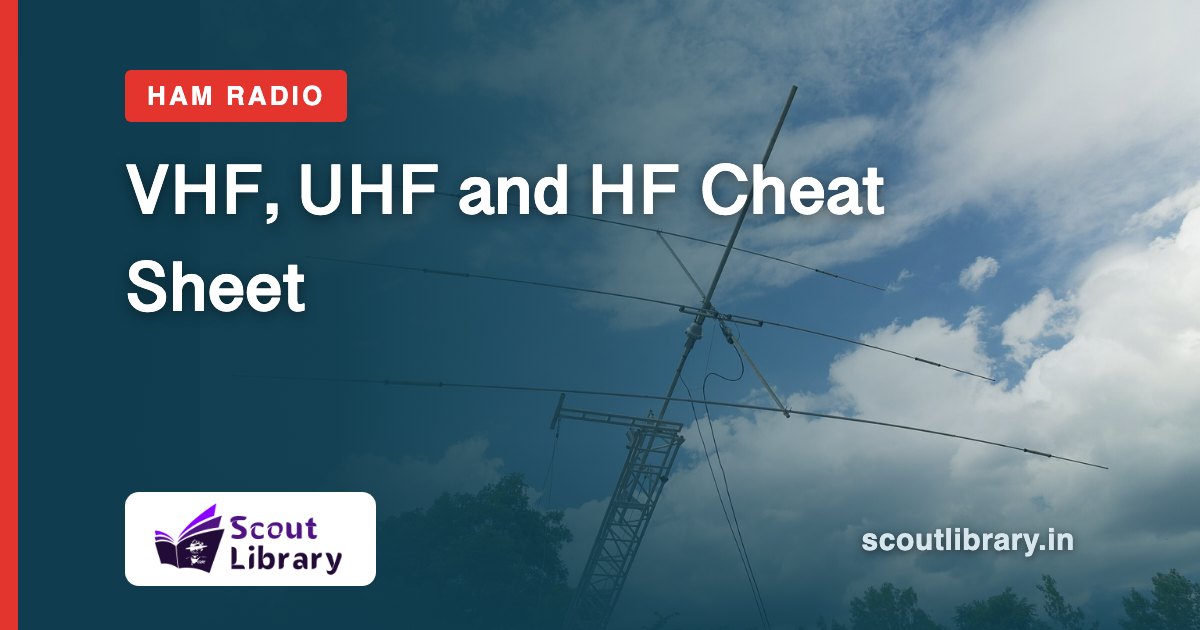
All three are bands of radio frequencies. Higher frequency usually means shorter reach over land but better handling of buildings.
| Band | Frequency | Typical behaviour | Good for |
|---|---|---|---|
| HF | 3 to 30 MHz | Signals can bounce off the ionosphere and return to earth, so they travel very far. | Talking worldwide. Needs larger antennas. |
| VHF | 30 to 300 MHz | Mostly line of sight. Reach depends on height and clear paths. | Local contacts, handheld radios, repeaters. |
| UHF | 300 MHz to 3 GHz | Handles buildings and cities well, but reach is shorter. | Cities, indoors, short hops. |
Pick HF when
You want distance and can put up a bigger antenna.
Pick VHF when
You want local contacts and a handheld that fits in a bag.
Pick UHF when
You are in a city or inside buildings.
i
Amateur bands you will hear about
Popular amateur bands include 2 metres (around 144 to 146 MHz, VHF), 70 centimetres (UHF) and the HF bands such as 40 metres and 20 metres.
Exact allowed ranges depend on your country and licence class. Check your licence conditions before you transmit.
@captain.ramkumar · VU3WMV. General guidance for beginners. Check your licence conditions and local rules.
Want your own ham radio licence?
Our book is available in English and Malayalam. The Licence Complete bundle adds a 16-lesson video course, a year of Scout Pro and two one-to-one sessions, in a single payment.
See the bundleRead the free guide