Introduction to Bearings and Route Following
In the world of scouting, navigation is a critical skill that empowers scouts to explore nature confidently and safely. Among the many navigation techniques, taking bearings and following a route are essential for any scout aiming to achieve the Dwitiya Sopan level. These skills not only enhance your ability to travel through unfamiliar terrains but also foster a deeper connection with the environment. Let’s delve into these techniques and understand how they fit into the Indian scouting context.
Understanding Bearings
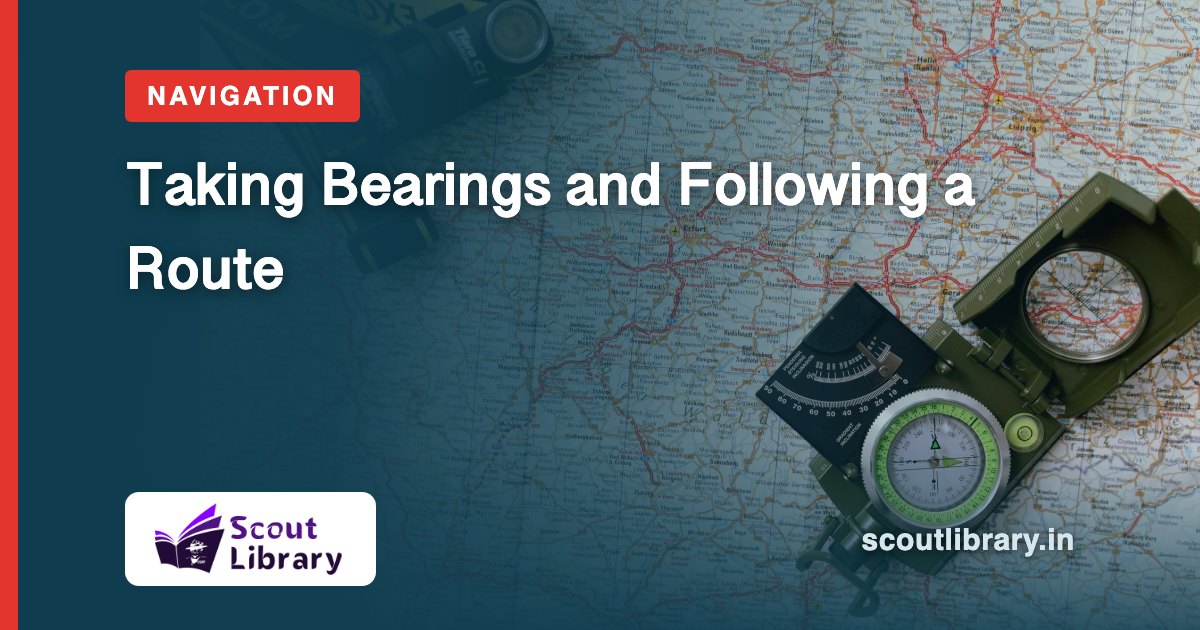
A bearing is a direction or path along which something moves or along which it lies. In scouting, it refers to the angle between the direction you’re facing and a reference point, usually true north. To take a bearing, scouts use a compass, a vital tool that guides them through India’s diverse landscapes, from the dense forests of the Western Ghats to the vast deserts of Rajasthan. Here’s how to take a bearing:
- Hold the compass flat in your hand and ensure the needle can move freely.
- Point the direction-of-travel arrow towards your intended destination.
- Rotate the compass housing until the orienting lines align with the magnetic needle, ensuring the red end is pointing north.
- Read the bearing number at the index line; this is your direction in degrees.
Following a Route
Following a route involves moving from one point to another using bearings and a map. This skill is particularly useful during treks in places like the Himalayas or the Nilgiri Hills. Here are steps to follow a route effectively:
- Plan Your Route: Before setting out, study your map and mark key landmarks and checkpoints.
- Take Initial Bearings: Determine the bearing from your starting point to your first landmark.
- Walk the Bearing: Use your compass to maintain the direction by aligning the needle with the orienting arrow as you walk.
- Check Landmarks: As you reach each checkpoint, verify your position with the map to confirm accuracy.
- Adjust Bearings: When necessary, take new bearings to adjust your course towards subsequent landmarks.
Practical Activity: Navigating a Local Park
To practice these skills, organize a navigation activity in a local park or a scout camp. Here’s a simple activity:
- Preparation: Divide into small groups, each with a compass and a map of the area. Mark several key points on the map as checkpoints.
- Activity: Each group starts from a common point, takes bearings to the first checkpoint, and follows the route. At each checkpoint, they should take a new bearing to reach the next point.
- Goal: The objective is to reach all checkpoints and return to the starting point. Encourage scouts to note any interesting observations or challenges faced during the activity.
- Debrief: Discuss the experience, sharing insights and learning how bearings helped navigate the terrain.
Conclusion
Mastering the skills of taking bearings and following a route is invaluable for any scout. Not only does it build confidence and self-reliance, but it also prepares you for more advanced adventures in India’s rich and varied landscapes. As you practice these skills, remember that each bearing and route you follow is a step towards becoming a more adept and prepared scout. Embrace the journey, and let the spirit of exploration guide you to new horizons. Happy scouting!
Keep Scout Library in your pocket
Read posts, circulars and ebooks in the free Android app, practise quizzes and get notified when new circulars are published.
Get the app on Google PlayBrowse ebooks