Six things to know before your first radio direction finding hunt.
Hidden transmitters
Organisers hide five low-power transmitters, called foxes, in the area. Their positions are not marked on the map.
They take turns
The foxes transmit one at a time in a repeating cycle, one minute each. Each sends a Morse identifier so you can tell which fox you are hearing.
Find the direction
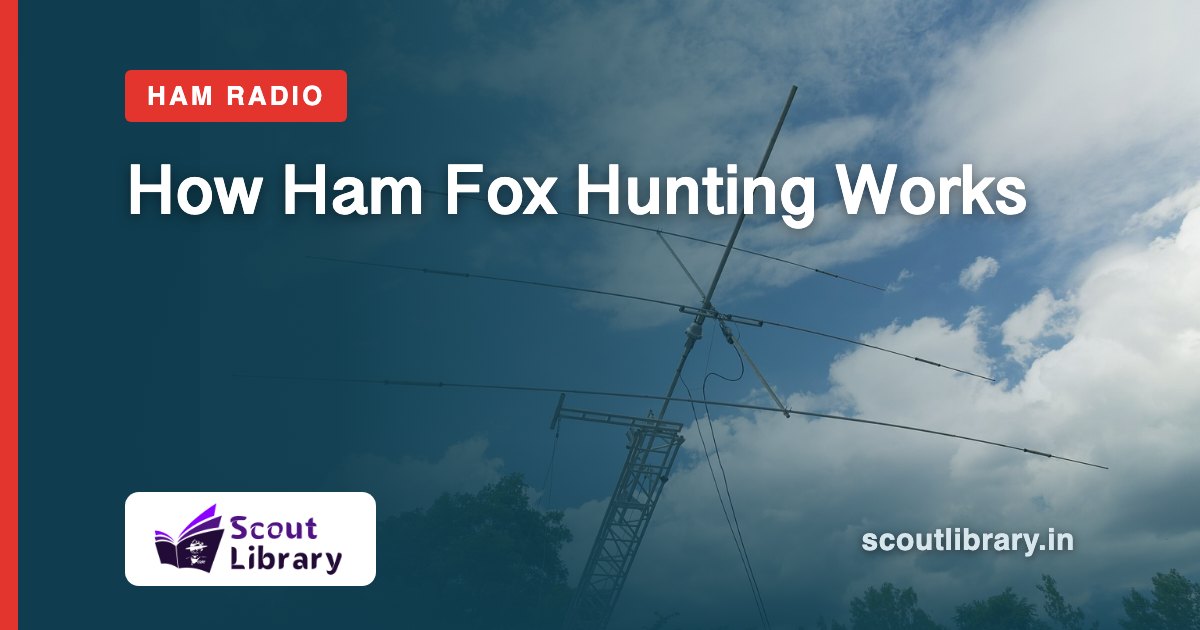
You carry a receiver with a directional antenna. On 2 m that is often a small Yagi, and an attenuator or gain control helps when you get close and the signal gets strong.
Be careful near buildings, hillsides and fences: reflections can give false bearings.
Navigate on foot
Use a map and compass to choose your route and run to each fox. Radio direction finding contests are held on foot.
How it is ranked
Depending on your category you must find three, four or all five foxes. Ranking is by the number of foxes found first, then by shortest time.
Where it is held
Contests use the 2 m or 80 m amateur bands, which are open to licensed hams worldwide.
Source: general description of amateur radio direction finding (ARDF), also called radio orienteering. Formats differ between clubs and events.
Want your own ham radio licence?
Our book is available in English and Malayalam. The Licence Complete bundle adds a 16-lesson video course, a year of Scout Pro and two one-to-one sessions, in a single payment.
See the bundleRead the free guide